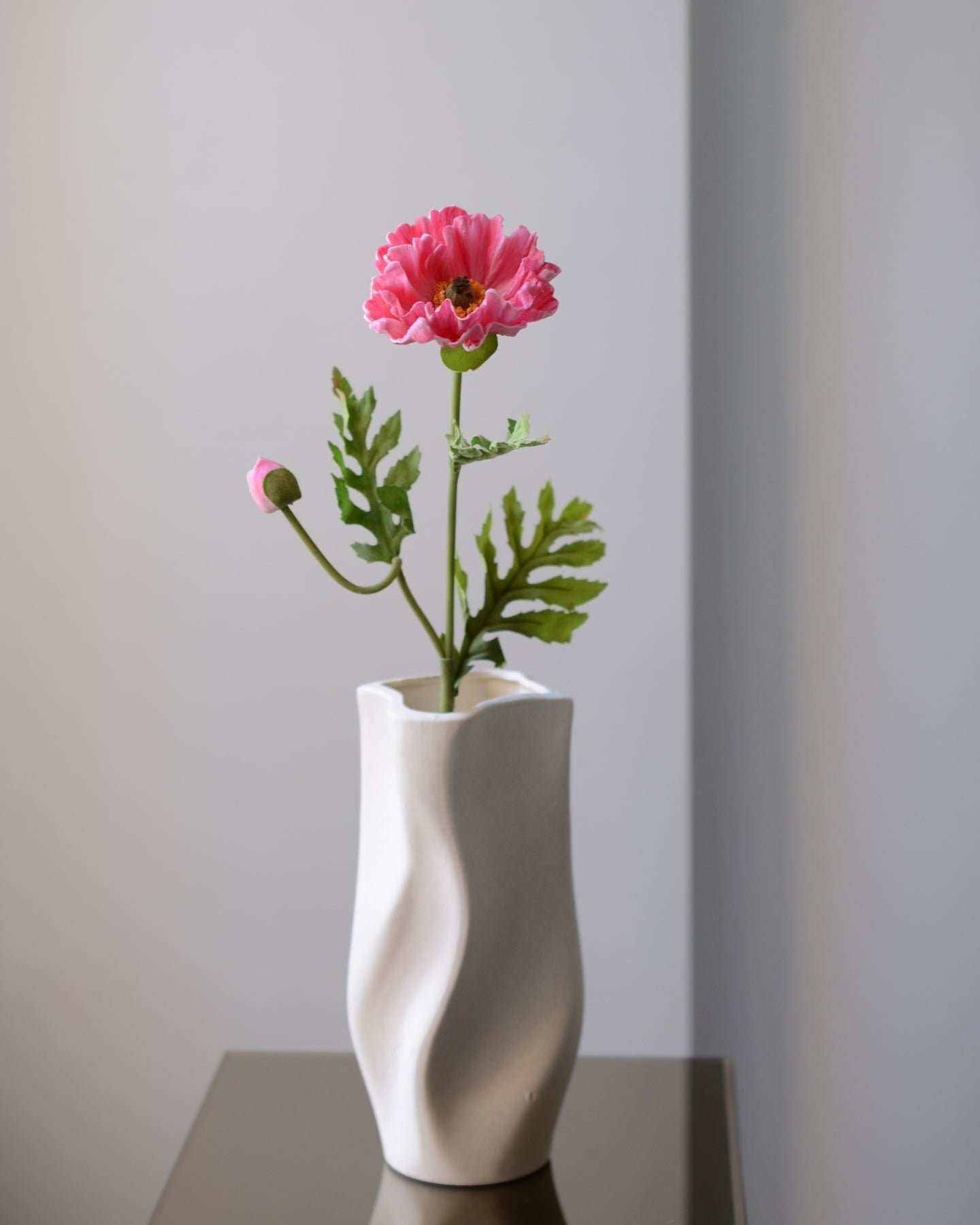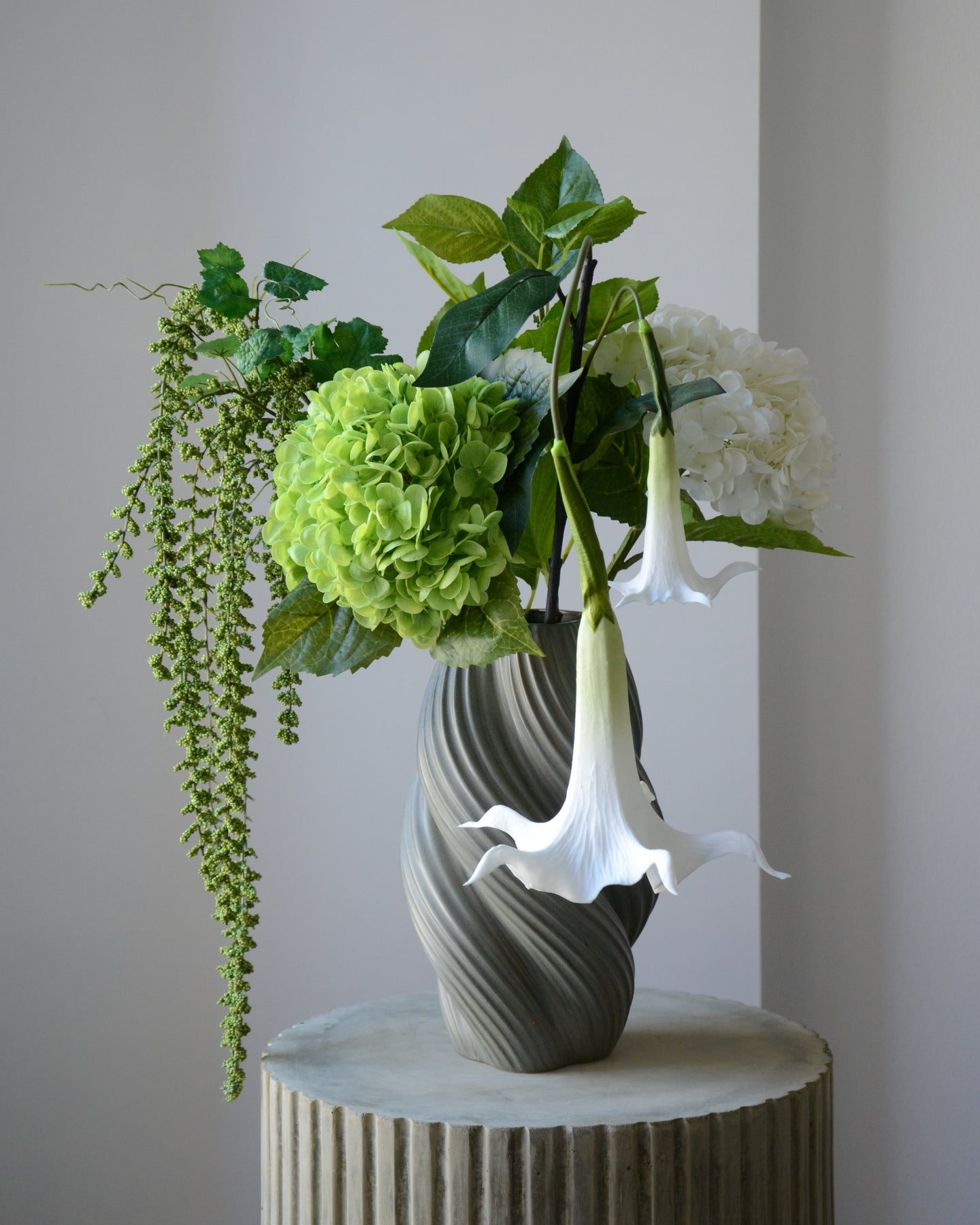


The thing that ages artificial flowers is not dust. It is light.
Ultraviolet light breaks the long molecular chains in a polymer and bleaches the pigment held inside it. The process is called photo-oxidation, and it happens slowly and invisibly until one day the white lily in the south-facing window has gone faintly cream and the green foliage has turned grey. Good real touch flowers are made to resist this. Cheap ones, with pigment painted onto the surface rather than mixed into the material, give up much sooner.

Light
The first rule for caring for artificial flowers is simple: be mindful of where you place them. Keep them in a bright spot, but out of direct sunlight. A console table set a metre back from the window will help preserve their colour for years, while a windowsill is far more exposed. If you do want to place an arrangement in a spot with strong direct sunlight, turn it every few months so the exposure is more even. Treat them as you would a good textile or a painting.
Heat affects them in much the same way, so avoid placing the flowers close to a very hot radiator.
Dust
What makes artificial flowers look artificial more than anything else is dust. Not the material, shape or colour. A layer of grey dust on the leaves is the most common reason you can immediately tell that a flower isn’t real.
Fortunately, it’s easy to stay on top of. A little regular cleaning is better than a deep clean every once in a while.
A soft brush is the best option for most flowers. A clean makeup brush or paintbrush can easily reach between the flowers and leaves. For larger arrangements, a hairdryer on the cool setting also works well. Hold it about a hand’s width away from the flowers, and never use hot air. Real touch leaves can soften and lose their shape at temperatures above around seventy degrees.
If a more thorough clean is needed, use a slightly damp microfibre cloth. If any colour comes off, stop, as this means the pigment sits on the surface rather than being part of the material. With good real touch flowers, the colour should not transfer.


Shaping
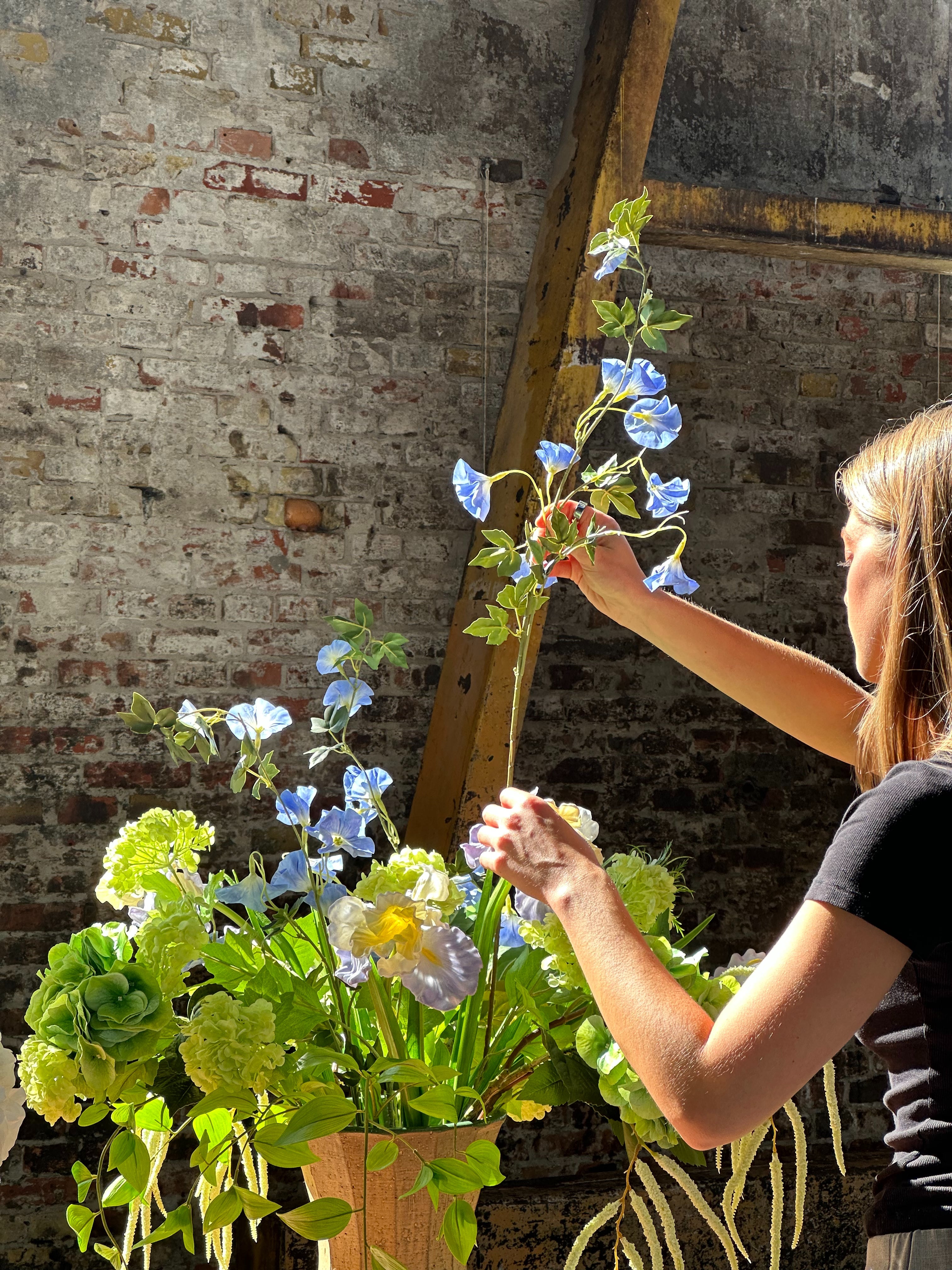
Most quality stems have a wire core, which allows them to be shaped rather than simply placed. A stem that cannot be bent cannot be arranged.
New stems are often compressed, stiff and slightly flattened. Work each stem in your hands and bend them into soft, natural curves. Let a ruscus branch fall as it naturally would. Curve the tulips. A stem that stands perfectly straight and upright looks manufactured, because nothing in nature grows that way.
Stems can be reshaped again and again, but avoid sharply bending them in exactly the same place repeatedly. Over time, the wire can weaken and develop a permanent kink.
Storing
Compressed petals can take on a shape that is difficult to fully restore. If you need to store your flowers away, a sturdy box is therefore better than a soft bag, and nothing heavy should be placed on top. Store them somewhere cool, dry and dark.